Importing AI devices from China is routine for thousands of brands, retailers and integrators — but the rules around it moved fast in 2025 and 2026. Duty-free small parcels largely disappeared, tariff rates changed several times, and devices with lithium batteries and radios need the right paperwork to move at all.
This guide walks through the full process in order, from first sample to repeat container orders. It reflects rules as of October 2026; tariffs in particular change often, so confirm current rates with your customs broker before each order.
Step 1: Order and evaluate samples
Samples tell you more than any spec sheet: build quality, real battery life, app quality, packaging and how responsive the supplier is. Good practice:
- Order two or three candidate models, ideally from the same supplier's range to compare fairly.
- Expect sample pricing above bulk pricing, plus express freight (DHL, FedEx, UPS). In-stock AI devices typically ship in 2–5 working days.
- Budget for import duty on samples — in the US there is no longer a duty-free threshold for small parcels.
- Test the product the way your customers will use it, and note every issue for the supplier.
You can order most of our consumer AI devices from 1 pc through the sample store.
Step 2: Agree specifications and a golden sample
Before a bulk order, put everything in writing in a specification sheet or the proforma invoice (PI): model, hardware configuration, firmware/app version, colours (Pantone), logo position, packaging, accessories, carton marks, certifications and labels. Then approve a golden sample — a reference unit, signed by both sides, that your bulk goods will be inspected against.
Step 3: Payment terms that protect both sides
| Method | Typical use | Pros | Cons |
|---|---|---|---|
| T/T (bank transfer) | Most bulk orders: 30% deposit, 70% before shipment | Standard, low fees | Requires trust; check bank details by phone to avoid fraud |
| PayPal / card | Samples and small orders | Buyer protection, fast | Higher fees; not practical for large amounts |
| L/C at sight | Large commercial projects | Bank-guaranteed against documents | Bank fees and paperwork; strict document matching |
| Trade Assurance (platform) | Orders placed through a B2B platform | Platform-backed protection | Only for orders on that platform |
Step 4: Choose your Incoterms
| Incoterm | Supplier's responsibility | Your responsibility | Best for |
|---|---|---|---|
| EXW (Ex Works) | Goods ready at the factory | Export clearance, freight, insurance, import | Buyers with their own forwarder in China |
| FOB (Free On Board) | Delivery onto the vessel at a Chinese port, export clearance | Sea freight, insurance, import clearance | Sea shipments where you control freight costs |
| CIF | Freight and insurance to your port | Import clearance, duties, local delivery | Buyers who want a simpler process |
| DAP | Delivery to your address, duties unpaid | Import duties and taxes | Door delivery while keeping duty control |
| DDP | Everything including duties and taxes | Receive the goods | Small orders and first-time importers — check the duty assumptions in the quote |
DDP is convenient, but make sure the quote is based on the correct HS code and current duty rates. An unrealistically cheap DDP quote often means undervaluation, which puts *your* goods and reputation at risk with customs.
Step 5: Shipping AI devices with lithium batteries
- Express (2–5 days) — samples and small orders; the courier handles customs clearance.
- Air freight (5–10 days) — urgent bulk orders; cost by chargeable weight.
- Sea freight (20–40+ days) — LCL or full containers for larger volumes; lowest cost per unit.
- Rail (to parts of Europe and Central Asia) — between air and sea in speed and cost.
Almost every AI device contains lithium cells, so every shipment needs a UN38.3 test summary and an MSDS/SDS, and packaging and labels must follow the IATA (air) or IMDG (sea) rules for batteries contained in or packed with equipment. Commercial kiosks ship in plywood cases by sea or air. Reputable suppliers prepare these documents automatically.
Step 6: Duties and import taxes in 2026
United States
- No de minimis: the $800 duty-free exemption for low-value shipments has been suspended for all countries since 29 August 2025 (and for China since earlier in 2025). It remains suspended as of October 2026, and the statutory exemption is legislated to end on 1 July 2027. Every shipment, including samples, is subject to duties.
- Tariffs changed repeatedly: in February 2026 the Supreme Court held that IEEPA does not authorise tariffs, ending the IEEPA-based tariffs. A temporary 10% global tariff under Section 122 followed, and from 24 July 2026 new Section 301 tariffs apply to imports from 60 economies — 12.5% for China and Hong Kong, on top of the normal (MFN) duty.
- Existing Section 301 duties on Chinese goods from earlier years continue to apply to many products, and rates depend on the exact HS code.
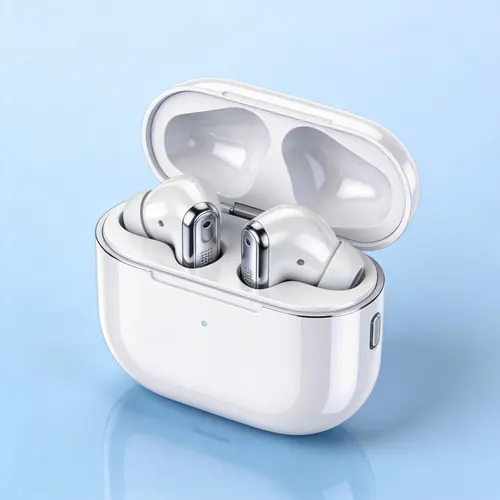
- What to do: give your broker the correct HS code (e.g. 8518.30 for earbuds/headphones, 8471 or 8517 headings for some terminals and connected devices — confirm per product) and get a landed-cost estimate before you order.
European Union
- VAT is always due on imports; for B2C parcels up to €150 it is usually collected at checkout via the IOSS scheme.
- Customs duty on small parcels: since 1 July 2026 the €150 duty exemption has been replaced by a flat €3 customs duty per item category in low-value e-commerce parcels — an interim measure planned until 2028.
- Commercial imports over €150 pay the normal duty rate for the HS code plus import VAT, which VAT-registered businesses usually reclaim.
Other markets
The UK, Canada, Australia, the Gulf states and Southeast Asian markets each have their own thresholds, VAT/GST rules and product approvals. Check certification requirements in our compliance guide and the market notes on our regions page.
Step 7: Quality inspection before the balance
- During production (DUPRO) — for larger or first orders, check the first finished units against the golden sample.
- Pre-shipment inspection (PSI) — when 100% of goods are packed, inspect a random sample using AQL levels you agreed in advance.
- Functional tests for AI devices — power-on, pairing, app login, wake word, voice recognition, OTA update, factory reset, battery charge, plus cosmetic checks.
- Packaging and labels — barcodes, CE/FCC/UKCA marks, battery labels, manuals in the right languages, carton marks and weights.
- Loading check for containers — quantity, carton condition and seal number.
Step 8: After delivery
- Inspect on arrival and report damage to the carrier and supplier within the agreed window.
- Keep the technical file, certificates and customs entries — authorities and marketplaces may ask years later.
- Agree the warranty and spare-parts process (replacement units, return-to-factory or local repair).
- Feed customer reviews back to the supplier for the next production batch.
Planning your first or next import?
Tell us your product, quantity and destination. We'll quote sample and bulk prices, recommend Incoterms and shipping, and prepare the documents for your market.
Frequently asked questions
Do I have to pay import duty on samples from China?
In the US, yes — the $800 de minimis exemption is suspended, so duties apply to every shipment, including samples. In the EU, VAT applies to all imports and, since 1 July 2026, low-value parcels also pay a flat €3 customs duty per item category.
What are the tariffs on electronics from China in 2026?
For the US, imports from China currently face the normal MFN duty plus the 12.5% Section 301 tariff introduced on 24 July 2026, plus any earlier Section 301 duties that apply to the specific HS code. Rates change often — confirm with your customs broker before ordering.
What is the safest way to pay a Chinese supplier?
Use staged payments: PayPal or card for samples, and for bulk orders a deposit (commonly 30%) with the balance after a pre-shipment inspection. For large projects, an L/C at sight adds bank protection. Always verify bank details by phone.
Should I choose FOB or DDP?
FOB gives you control over freight and customs and usually lower total cost if you have a forwarder. DDP is simpler for small orders and first imports, but check that the duty calculation uses the correct HS code and value.
How long does shipping from China take?
Express takes about 2–5 days, air freight about 5–10 days, and sea freight about 20–40+ days depending on the destination port and customs clearance.
What documents are needed to ship devices with batteries?
A UN38.3 test summary and MSDS/SDS for the batteries, plus the commercial invoice, packing list and, for sea freight, the bill of lading. Certificates and test reports for your market should be ready before shipping.
Products mentioned in this guide