AI devices combine several things regulators care about at once: radios (Wi-Fi, Bluetooth, sometimes 4G), lithium batteries, microphones and cameras, cloud connectivity, and — increasingly — conversational AI. Each of these triggers its own rules. Get them right and customs clearance, marketplace listings and retail onboarding go smoothly. Miss one and goods can be held, relabelled at your cost, or refused.
This guide is written for brands, importers and distributors. It explains what each mark means, what changed in 2025–2026, and exactly which documents to ask your factory for. It is general guidance, not legal advice — for borderline products, confirm with an accredited test lab or a regulatory consultant in your market.
The building blocks: what almost every AI device needs
| Requirement | What it covers | Typical evidence |
|---|---|---|
| Radio | Wi-Fi, Bluetooth, cellular, NFC, UWB transmitters | RF test reports; EU RED / US FCC ID / UK UKCA |
| EMC | Electromagnetic emissions and immunity | EMC test report |
| Electrical safety | Shock, fire and heat hazards (incl. chargers) | IEC/EN 62368-1 report, CB certificate |
| Restricted substances | Lead, cadmium, mercury, certain flame retardants and phthalates | RoHS test report; REACH SVHC statement |
| Batteries | Lithium cell safety and transport | UN38.3 test summary, MSDS/SDS, IEC 62133 report |
| Bluetooth branding | Use of the Bluetooth name and logo | Bluetooth SIG (BQB) listing |
| Product safety & traceability | Labels, warnings, manufacturer/importer details | Label artwork, user manual, technical file |
European Union: CE marking and what changed recently
To place an AI device on the EU market you affix the CE mark and sign an EU Declaration of Conformity (DoC) covering every applicable law. For connected devices the core laws are:
- Radio Equipment Directive (RED) 2014/53/EU — covers radio performance, EMC and electrical safety for anything with a transmitter.
- RED cybersecurity requirements — under Delegated Regulation (EU) 2022/30, internet-connected radio equipment, toys and wearables must meet cybersecurity, privacy and anti-fraud requirements. They have applied since 1 August 2025; the harmonised standards are the EN 18031 series. Expect questions about default passwords, secure updates and how personal data is protected.
- RoHS 2011/65/EU and REACH — restricted substances and substances of very high concern.
- General Product Safety Regulation (GPSR) — applicable since 13 December 2024; requires an EU-based responsible economic operator and clear traceability information on the product or packaging.
- Common charger rules — many small devices (including earbuds, headphones and portable speakers) must use a USB-C charging port, and consumers must be offered the option to buy without a charger.
- Batteries Regulation (EU) 2023/1542 — new battery labelling requirements apply from 18 August 2026, a QR code and user-removable / replaceable portable batteries from 18 February 2027 (with limited exceptions). Factor this into new designs now.
The EU AI Act and AI chat features
The EU AI Act applies in stages. Its transparency obligations (Article 50) apply from 2 August 2026: if a device lets people talk to an AI system — an assistant, companion or kiosk avatar — users must be clearly told they are interacting with AI unless that is obvious from context, and AI-generated audio, images or video must be marked in a machine-readable way. Most consumer AI gadgets are not 'high-risk' under the Act; the high-risk deadlines were postponed by the 2026 AI Omnibus (to 2 December 2027 for standalone systems and 2 August 2028 for AI embedded in regulated products such as toys). Keep an eye on official guidance, because timelines have changed before.
Looking ahead: the Cyber Resilience Act
The EU Cyber Resilience Act (CRA) will add horizontal cybersecurity obligations for products with digital elements. Its vulnerability-reporting duties start in September 2026 and its main requirements in December 2027. If you are designing a product now that will still be sold in 2028, plan for CRA-style security updates and documentation from the start.
United States: FCC, CPSC and state rules
- FCC equipment authorisation — devices that intentionally transmit (Wi-Fi, Bluetooth, cellular) need FCC Certification with an FCC ID issued through a Telecommunication Certification Body. Purely digital devices without radios may use the simpler Supplier's Declaration of Conformity (SDoC). Ask for the grant, the test reports and the exact FCC ID that will be printed on your label.
- Children's products — anything designed primarily for children 12 and under needs third-party testing at a CPSC-accepted lab and a Children's Product Certificate (CPC). For toys, the mandatory standard is ASTM F963 (the 2023 edition is now federally mandated).
- CPSC eFiling — since 8 July 2026, certificate-of-compliance data for CPSC-regulated products (including children's products and toys) must be filed electronically with the customs entry, with no low-value or direct-to-consumer exemption. Make sure your customs broker has the product ID, the rules certified to, manufacturing date and site, last test date and lab details.
- Button and coin batteries — products containing them must meet the safety requirements of Reese's Law (secured battery compartments, warnings).
- Privacy — devices that collect personal information from children under 13 (including voice recordings) are subject to COPPA. The amended COPPA Rule requires compliance from 22 April 2026, including written data-retention policies.
- State laws — California Proposition 65 warnings and state battery and e-waste rules may apply depending on materials and channels.
United Kingdom: UKCA and PSTI
Great Britain uses the UKCA mark, and the government has extended acceptance of the CE mark for many product categories — check the current position for radio equipment before you print labels. In addition, the Product Security and Telecommunications Infrastructure (PSTI) regime has applied since 29 April 2024 to connectable consumer products: no universal default passwords, a published way to report security vulnerabilities, and a clear statement of the minimum period security updates will be provided. Smart speakers, AI companions, wearables and app-connected gadgets are all in scope.
Middle East, Asia and Latin America
| Market | Key requirements for AI devices | Notes |
|---|---|---|
| Saudi Arabia | SASO conformity via the SABER platform; CST (formerly CITC) type approval for radio | Product and shipment certificates are both needed |
| UAE | TDRA type approval for radio/telecom; ECAS/EQM schemes for regulated products | Register the importer before shipping |
| Gulf (GSO) | G-Mark for toys and low-voltage electrical equipment | Accepted across GCC member states |
| Singapore | IMDA registration for radio devices | Straightforward for Wi-Fi/Bluetooth with CE/FCC reports |
| Malaysia | SIRIM / MCMC certification for radio and electrical products | Local applicant required |
| Brazil | ANATEL homologation for radio devices | Local representative required; plan extra lead time |
| Mexico | NOM standards and IFT approval for telecom equipment | Spanish labelling required |
| India | BIS registration (CRS) for many electronics; WPC approval for radio | Lead times can be long |
Many emerging markets accept CE and FCC test reports as the technical basis, which is why it pays to certify the base model properly in the EU and US first. See our regional market overview for the product mix and certificates we typically prepare per region.
Requirements by product type
| Product | Extra attention points |
|---|---|
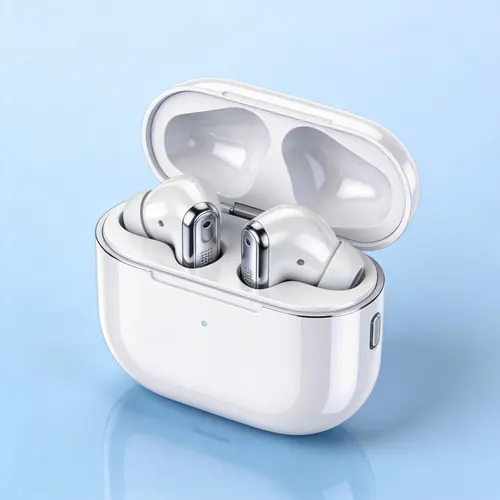
| AI earbuds & translator earbuds | Bluetooth BQB, SAR/RF exposure where applicable, USB-C (EU), small-battery transport |
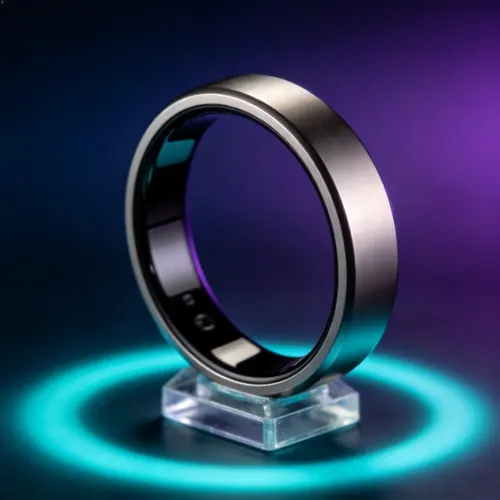
| AI smart rings & health wearables | Skin-contact materials, RF exposure, battery safety; stay within wellness claims unless you pursue a medical-device pathway |
| AI companion toys & plush | Toy safety (ASTM F963 / EN 71), CPC and eFiling (US), RED cybersecurity, COPPA/GDPR for voice data, AI-interaction disclosure |
| AI glasses & cameras | Privacy: recording indicators, data storage disclosures; optical and RF exposure |
| AI kiosks, signage & POS | IEC 62368-1 safety and CB reports, EMC for commercial environments; PCI PTS for payment terminals; accessibility rules in some public-sector tenders |
| AI security cameras & edge boxes | Cybersecurity (RED / PSTI / CRA), local data-protection rules for video, NDAA-related restrictions for some US government buyers |

Batteries and shipping documents
Nearly every AI device ships with lithium cells. For any shipment, expect to provide a UN38.3 test summary, a current MSDS/SDS, and packaging and labelling that follow the current IATA (air) or IMDG (sea) rules for lithium batteries packed with or contained in equipment. Airlines and freight forwarders will refuse cargo without them. A reliable supplier sends these documents with the commercial invoice without being asked.
Your pre-order compliance checklist
- Tell the factory every destination market and sales channel (Amazon, retail, public tenders) before quotation.
- Request test reports and certificates for the exact model, including the lab name, date and standard edition.
- Check that the names, model numbers and ratings on reports match your label artwork and manual.
- For radio devices, confirm the FCC ID / RED notified-body involvement and that your branding is covered (multiple listing or new grant).
- For connected devices, request evidence for RED cybersecurity / PSTI: password policy, update mechanism, vulnerability-disclosure contact, data-storage location.
- For children's products, plan CPC testing and eFiling data with your customs broker.
- Get battery transport documents (UN38.3, MSDS) in advance.
- Keep a technical file (reports, DoC, label, manual, BOM, risk assessment) for at least 10 years.
Need the full document set for your market?
Tell us your product and destination. We'll confirm which certificates the model already holds, what extra testing is needed, and the realistic timeline — before you place an order.
Frequently asked questions
Is the CE mark enough to sell AI devices in the US?
No. The US does not recognise CE. Wireless devices need FCC equipment authorisation (an FCC ID for most Wi-Fi and Bluetooth products), and children's products need a CPC based on CPSC-accepted lab testing.
Do AI devices need special certification because they use AI?
There is no separate 'AI certificate' for consumer gadgets. However, in the EU the AI Act's transparency rules apply from 2 August 2026 — users must be told when they are talking to an AI — and AI toys must also meet toy-safety and RED cybersecurity requirements. Privacy laws such as GDPR and COPPA apply to voice data.
Can I reuse the factory's certificates under my brand?
Often yes for ODM products, if the hardware is unchanged. Depending on the market this may require a new listing, a change of applicant, or a letter of authorisation from the certificate holder. Any hardware change may require retesting.
What is the EU RED cybersecurity requirement?
Since 1 August 2025, internet-connected radio equipment, toys and wearables sold in the EU must meet cybersecurity, data-protection and anti-fraud requirements under Delegated Regulation (EU) 2022/30, usually demonstrated with the EN 18031 standards.
What documents are needed to ship devices with lithium batteries?
A UN38.3 test summary, an MSDS/SDS, and correct packaging and labels under IATA (air) or IMDG (sea) rules. Your freight forwarder will ask for them before booking.
How long does certification take?
Allow roughly 2–6 weeks per market for standard testing when the product passes first time. Markets requiring local type approval (such as Brazil or India) can take considerably longer.
Products mentioned in this guide